
AI & Data Science · ScienceDaily AI
AI May Not Work Like the Human Brain After All, Scientists Discover
A new study from York University reveals that artificial neural networks can predict brain activity while relying on internal mechanisms the brain does not use. The findings challenge the assumption that AI models are truly brain-like and introduce a diagnostic tool to identify which model components genuinely align with biological vision.
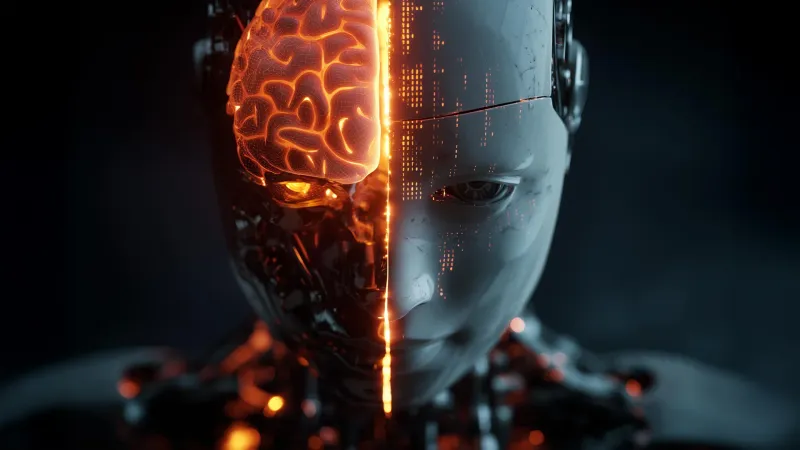
### The Illusion of Brain-Like AI
For more than a decade, artificial neural networks (ANNs) have been celebrated as some of the most promising tools for understanding how the brain processes visual information. These computer systems, designed to recognize objects in images, have demonstrated a remarkable ability to reproduce patterns of neural activity in the brain's visual system. This success has led many neuroscientists to describe them as 'brain-like' and to rely on them as computational models of vision. But a new study from York University suggests that this resemblance may be more superficial than previously thought. The research, published in *Nature Machine Intelligence*, reveals that even AI models that closely predict brain activity may rely on internal processes that the brain does not use. The discovery raises important questions about the reliability of AI in neuroscience research and challenges the assumption that matching brain responses equates to matching underlying mechanisms.
### A New Test: Reverse Predictivity
The York University team, led by Assistant Professor Kohitij Kar, Canada Research Chair in Visual Neuroscience, decided to approach the problem from a different angle. Rather than simply measuring how well AI models predict the activity of brain cells, they investigated whether recorded brain activity could also predict what was happening inside the AI models. If these systems truly operate like the brain, the relationship should work in both directions. To investigate, they developed a method called **reverse predictivity testing**, which allowed them to evaluate similarities that conventional tests could overlook. "Until now, scientists mostly tested this in one direction. They asked whether AI models can predict brain activity," says Kar. "We decided to ask the reverse question: can brain activity predict the internal features of AI models?" The approach involved examining responses to a wide variety of visual images, including 1,320 natural photographs and realistic synthetic images featuring 10 familiar subjects: a bear, an elephant, a face, an apple, a car, a dog, a chair, a plane, a bird, and a zebra. These objects appeared against a variety of natural scenes and indoor or outdoor backgrounds. The researchers also introduced 300 additional images showing the same subjects in different visual styles, including outlines, drawings, simplified representations, and artistic interpretations.
### The Disconnect Between AI and Biological Vision
The results revealed a significant disconnect between artificial intelligence and biological vision. AI models were generally successful at predicting the responses of recorded neurons, the specialized cells that transmit information throughout the brain. However, when the researchers reversed the process, those same neuronal responses were much less effective at predicting many of the models' internal features. This difference was particularly revealing because the researchers did not observe the same problem when comparing neuronal activity across different brains. "The results were striking. While AI models can predict the neurons we recorded in the brain fairly well, the brain cannot equally predict many of the model's internal features. Interestingly, this is not the case when neurons from one brain are compared against ones from another brain," says Kar. The findings suggest that an AI system can produce results that closely resemble those of the brain while relying on very different internal mechanisms. In other words, matching the brain's responses does not necessarily mean that the underlying processes are the same.
### Implications for Neuroscience and Human Behavior
The implications extend well beyond computer vision. Artificial intelligence is increasingly used to help researchers design experiments, study human behavior, and investigate neurological and psychological conditions. Many of these applications depend on the assumption that AI models process information in ways that resemble the human brain. If that assumption is incorrect, researchers could draw misleading conclusions from models that appear accurate on the surface but operate differently underneath. "Our findings challenge how similar current AI systems really are with the primate brain. We show that models that were previously thought to be brain-like rely on internal components that the brain does not appear to use. We provide a well-vetted diagnostic metric for the field," says Sabine Muzellec, a postdoctoral fellow at York and first author of the study. The concern may also apply to other areas of neuroscience. Similar AI models are already being used to study hearing, language, and movement. If those systems also rely on internal processes that differ from biological ones, researchers may need to reconsider how much they can reveal about the nervous system.
### Building More Reliable Brain-Like AI
Rather than suggesting that artificial neural networks should be abandoned, the findings provide a way to make them more useful and scientifically reliable. By identifying which features of an AI model correspond to real neural activity, researchers can focus on developing systems that more accurately reflect the biological mechanisms behind perception. "Our approach helps identify which parts of an ANN truly match brain activity, allowing us to build more reliable models for understanding how people see and interpret the world," says Kar. "This is especially important for our autism research program, which builds on models of the neurotypical brain as a baseline." A neurotypical brain refers to one with patterns of neurological development and functioning generally considered typical. Establishing accurate models of these patterns is important for researchers investigating how perception and information processing may differ in conditions such as autism. To help other scientists put their findings into practice, the team has released a publicly available testing toolkit that AI developers can use to evaluate their own models and identify opportunities for improvement. The study introduces a new approach to evaluating artificial intelligence that goes beyond measuring how well a system performs a task. The researchers argue that understanding whether AI reaches its results through processes that genuinely resemble those of the brain is just as important.
### A New Standard for AI in Neuroscience
The discovery could help guide the development of a new generation of AI models that not only recognize the world with impressive accuracy but also offer a more faithful representation of how the brain works. As AI continues to advance, the distinction between superficial similarity and genuine mechanistic alignment becomes increasingly critical. The York University team's reverse predictivity testing provides a diagnostic metric that can be used to assess the biological plausibility of AI models, ensuring that they serve as reliable tools for neuroscience. "Ultimately, we need computational models to truly understand the underlying neural mechanisms of how we recognize objects," says Kar. "How do we see objects move? While it's a very easy task that we do every day, computationally, though, it's a very challenging problem." By revealing the hidden differences between artificial and biological vision, this research paves the way for more accurate models that can deepen our understanding of the brain and improve clinical research for conditions ranging from post-traumatic stress disorder to autism.
Key takeaways
- AI models can predict brain activity without using the same internal processes as the brain, challenging the assumption that they are truly 'brain-like'.
- Reverse predictivity testing reveals that brain activity is less effective at predicting AI internal features, unlike brain-to-brain comparisons.
- The findings caution against overreliance on AI in neuroscience and suggest a need for more biologically plausible models.
- A publicly available toolkit allows researchers to evaluate AI models for genuine alignment with brain mechanisms.
Source: ScienceDaily AI ↗