
Norris Takes Pole in Sao Paulo, but the 2026 Brazil Grid Is in Disarray: Four Front-Runners Thrown to the Back
Baca dalam 60 detik
- Lando Norris mengunci posisi terdepan di Grand Prix Brasil 2026, sementara Kimi Antonelli dan Liam Lawson mengejutkan di barisan depan.
- Hukuman pergantian komponen power unit membuat George Russell, Charles Leclerc, Lewis Hamilton, Max Verstappen, dan Sergio Perez harus start dari posisi jauh di belakang.
- Balapan di Interlagos berpotensi menyajikan comeback dramatis, tetapi juga mempertaruhkan strategi tim dan regulasi teknis yang makin ketat.
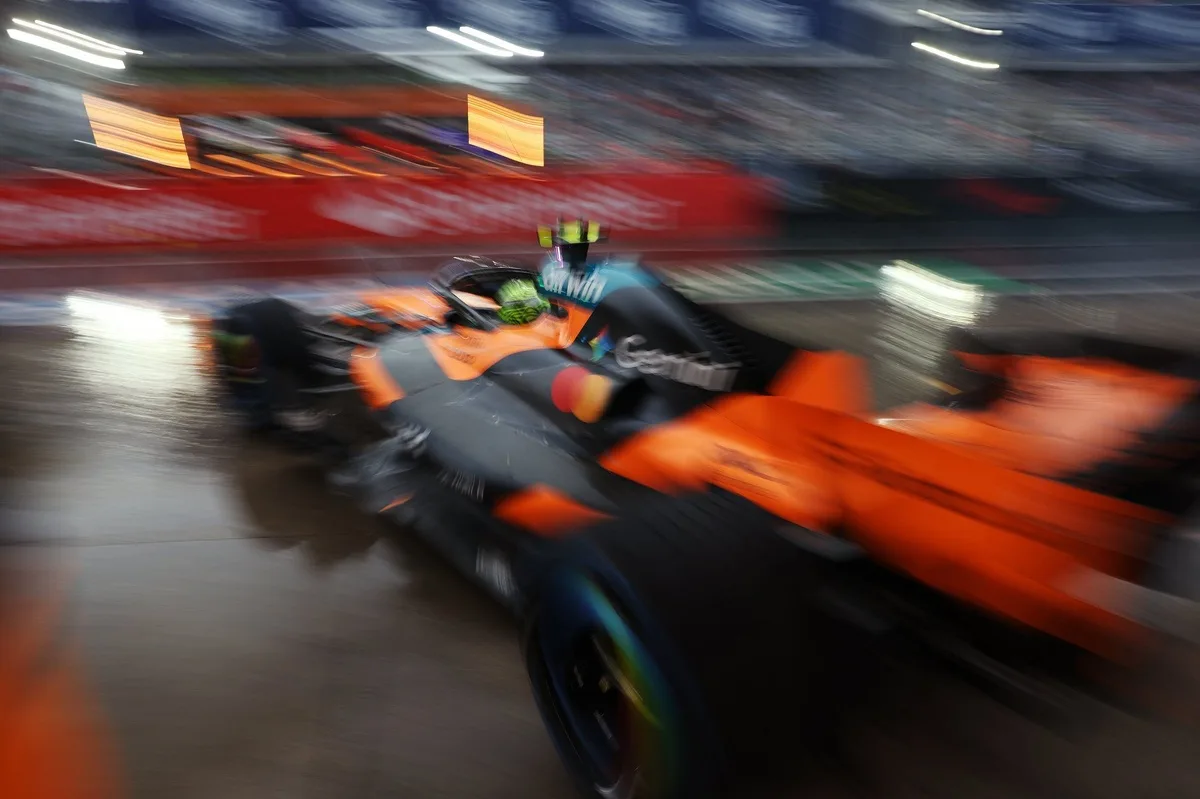
Lando Norris secured pole position for the 2026 Brazilian Grand Prix at the Interlagos circuit in Sao Paulo after setting the fastest time in qualifying. But the McLaren driver's pole almost lost its meaning as a storm of power unit component change penalties scrambled the grid: four front-runners—George Russell, Charles Leclerc, Lewis Hamilton, and Max Verstappen—must start the race from the back.
The provisional grid released by F1 shows Norris in the first slot, followed by surprise Kimi Antonelli (Mercedes) in second and Liam Lawson (Racing Bulls) in third. Nico Hülkenberg (Audi) and Isack Hadjar (Red Bull) complete the top five. Meanwhile, Russell, who was originally seventh, received a five-place grid penalty, Leclerc was dropped from 14th due to a 10-place grid penalty, and Verstappen had to accept the bitter reality of starting from 20th.
These penalties are not just a technical story. Formula 1's power unit regulations limit the number of components that may be used in a season. When teams change components beyond the quota—whether due to damage, reliability, or strategy—they must accept a grid penalty. In recent seasons, this phenomenon has become increasingly common toward the end of the year, when teams chase performance or prepare for the following season. Interlagos, with its circuit character that demands engine power and courage in the corners, is an unfriendly place for those who must overtake from behind.
For Norris, this pole is a golden opportunity to widen the gap in the drivers' standings. But the pressure remains: Antonelli, Mercedes' young driver, showed competitive pace, while Lawson proved that Racing Bulls can be aggressive in qualifying. On the other side, top teams such as Red Bull and Ferrari must design careful recovery strategies. Verstappen and Leclerc, who routinely challenge for podiums, must now fight from the middle or back, facing the risk of collisions, tire degradation, and losing valuable points.
"Power unit penalties are always a double-edged sword. On one hand, teams want to ensure reliability; on the other, they must pay dearly on track. Interlagos will test not only speed but also composure and strategy," said an F1 analyst, as quoted by motorsport.com.
For fans in Indonesia, the 2026 Brazilian Grand Prix remains an attractive spectacle, especially since the race is broadcast live via digital platforms and subscription television. Although there is no Indonesian driver on the grid, enthusiasm for F1 continues to grow, as shown by the rising number of viewers and discussions on social media. Several local automotive communities even hold watch parties, making Interlagos a gathering event for motorsport fans in the country.
The question is, will Norris be able to convert pole into a win, or will the penalized drivers—especially Verstappen and Leclerc—provide the surprise? With a circuit character that demands courage and a mature tire strategy, the 2026 Brazilian Grand Prix has the potential to be one of the most dramatic races of the season. The drivers' standings could change drastically, and the competition heading into the rest of the season will only heat up.


