Police Chief Suyudi Ario Seto Reassigns 704 Senior and Mid-Level Officers, Two Officers Tied to Wiretapping Case Moved
Baca dalam 60 detik
- Polri merombak 704 perwira tinggi dan menengah melalui empat surat telegram yang diteken Kapolri Jenderal Suyudi Ario Seto.
- Irjen Ahrie Sonta dan Eko Hadi Santoso, dua perwira yang diduga terlibat kasus penyadapan, dicopot dari jabatan strategisnya.
- Rotasi juga menyasar kursi Kapolda Kalimantan Selatan dan Papua, menandakan konsolidasi internal di tubuh Polri.

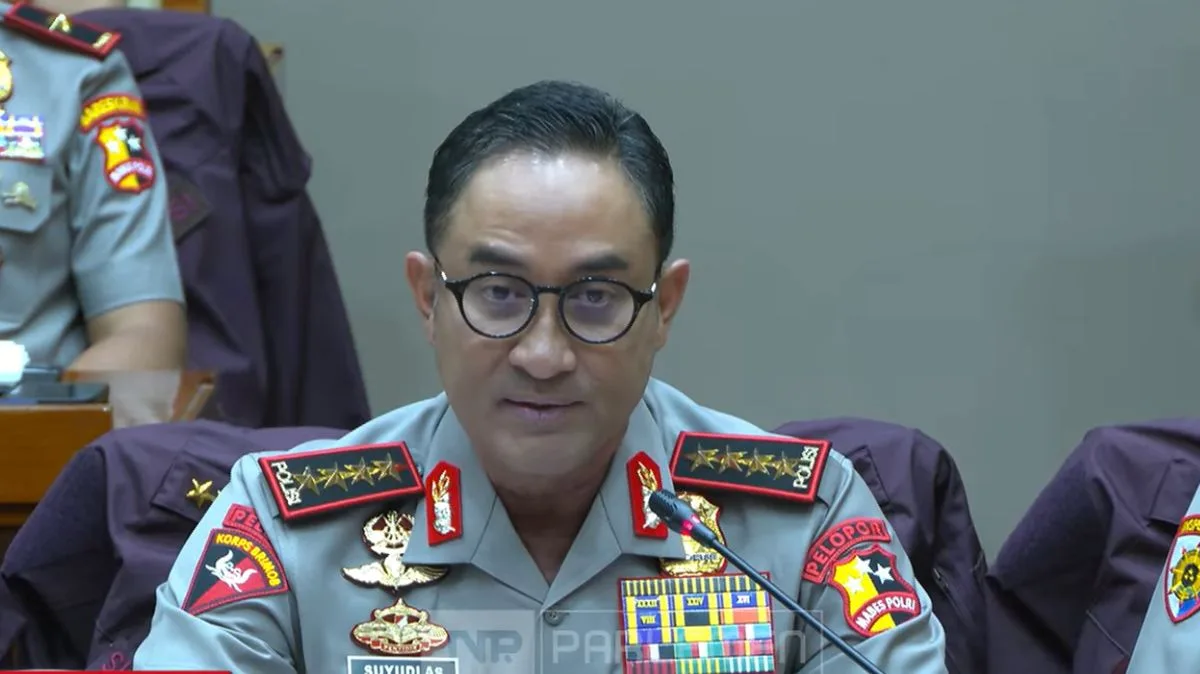
National Police Chief General Suyudi Ario Seto has signed four telegram letters containing a sweeping reassignment of 704 high-ranking officers (Pati) and mid-level officers (Pamen) within the Indonesian National Police (Polri). The policy is one of the largest personnel overhauls of Suyudi's tenure and immediately drew public attention because it touches several strategic positions, including two officers currently caught up in an alleged wiretapping case.
The reassignments are set out in National Police Chief Telegram Letters numbered ST/2598/XI/KEP./2026, ST/2599/XI/KEP./2026, ST/2600/XI/KEP./2026, and ST/2601/XI/KEP./2026. Their scope runs from National Police Headquarters down to regional levels, reflecting an effort to consolidate the organization across the board. The move comes amid public pressure on Polri to resolve the wiretapping case involving internal personnel.
Two names in the spotlight are Inspector General Ahrie Sonta and Eko Hadi Santoso. Ahrie, previously head of the National Police's Legal Division, has been moved to a senior officer post at Yanma Polri. Eko, formerly a principal police instructor at Sespim Lemdiklat Polri, now holds a Pati post at Yanma Polri. Both are reported to be under examination over the alleged wiretapping, so the rotation is being read as an initial step in enforcing internal discipline.
Besides removing the two officers in question, Suyudi also rotated several regional police chief posts. The South Kalimantan police chief post, previously held by Inspector General Rosyanto Yudha Hermawan, now goes to Inspector General Almas Widodo Kolopaking. Meanwhile, the Papua police chief post, previously held by Inspector General Petrus Patrige Rudolf Renwarin, has been taken over by Inspector General Alfred Papare. The changes at the regional level are seen as part of refreshing leadership in the regions, especially in areas with complex security challenges such as Papua.
Police observers say the large-scale reassignment is not merely a routine rotation. According to them, an overhaul touching high-ranking officers and strategic positions shows an urgent need to repair the institution's image. The wiretapping case involving officers has tarnished Polri's credibility, so the police chief's firm action is seen as a signal that violations will not be tolerated. However, the public is still waiting to see whether the legal process against the two officers will continue or stop at the job changes.
In the Indonesian context, reassignments within Polri have always been an indicator of internal dynamics and relations with power. Some quarters are urging that the rotation not stop at repositioning but also be accompanied by transparency in the examination process. They worry that if the wiretapping case is not fully investigated, public trust in law enforcement will erode further. On the other hand, the police chief has full authority to arrange personnel formations for the sake of organizational effectiveness.
"Reassignment is the police chief's authority, but public accountability must still be upheld, especially when it concerns officers under examination," said a police observer who asked not to be named.
Going forward, attention will focus on how Inspector General Ahrie Sonta and Eko Hadi Santoso undergo the legal process, and whether their new positions at Yanma Polri are an intermediate step toward an ethics examination. In addition, the public will scrutinize the performance of the new police chiefs in South Kalimantan and Papua, and whether they can address security and public service challenges in their respective regions. The rotation of 704 officers could be a turning point for Polri's internal reform, or it could simply become routine without any deterrent effect.