
Roy Suryo's Camp Urges Judges to Re-examine Jokowi's Diploma, Letter Copied to Prabowo
Baca dalam 60 detik
- Tim pembela Roy Suryo menyerahkan permohonan formal agar majelis hakim memverifikasi kembali keaslian dokumen ijazah Joko Widodo.
- Permohonan itu menyertakan tiga ijazah UGM terbitan November 1985 sebagai pembanding dan ditembuskan ke sejumlah institusi tinggi negara.
- Hakim belum memberi tanggapan atas surat tersebut dan memastikan persidangan perkara pencemaran nama baik berlanjut pekan depan.
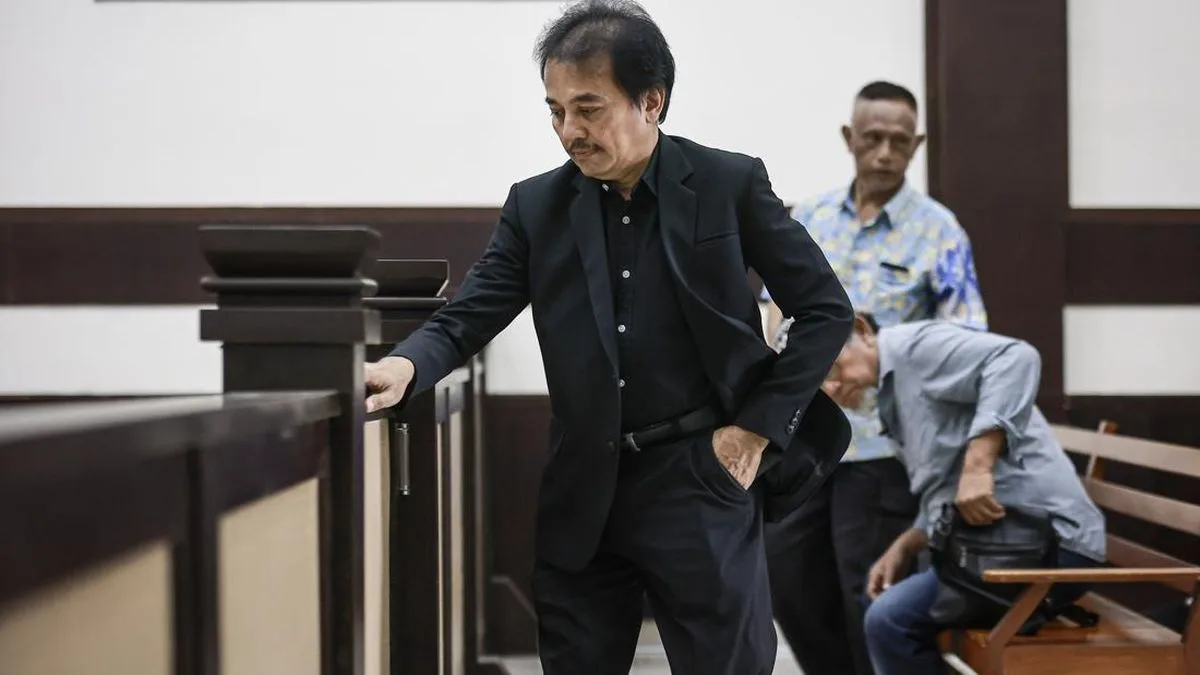
The request for a re-examination of the diploma of the 7th President of Indonesia, Joko Widodo, has resurfaced in the courtroom of the East Jakarta District Court. Roy Suryo's attorney, Refly Harun, submitted an official letter to the panel of judges asking that Jokowi's physical diploma document be examined and re-tested against three comparison diplomas from Universitas Gadjah Mada issued in November 1985.
The move was made amid the judicial process against Roy Suryo, who is charged with defamation and electronic information violations related to the fake diploma allegation. Refly delivered the request at a follow-up hearing on Wednesday (11/11), before the proceedings were closed. He stressed that the letter was not merely a verbal note but a formal request that he wanted the panel to accept legally.
What makes this maneuver stand out is not only its content but also the list of recipients of its copies. The letter was addressed to a number of institutions, from the Chief Justice of the Supreme Court, the Judicial Commission, President Prabowo Subianto, the Ombudsman, House Commission III, the Attorney General, to the oversight bodies within the Supreme Court and the High Court. According to Refly, the copies were needed so that the matter would be recorded in the judicial oversight chain, not merely consumed within the courtroom.
The panel of judges accepted the file without giving a substantive response. The judge only affirmed that the case would continue the following week. This stance can be read as an effort to maintain neutrality: a request that drags in the name of a former president and several high state institutions does not automatically change the course of the examination. However, indirectly, the letter adds public pressure on the transparency of the case handling.
In the indictment, prosecutors cast Roy Suryo as the party who spread the fake diploma claim. He is charged under Article 433 paragraph (1) in conjunction with Article 441 paragraph (1) of Law Number 1 of 2023 on the Criminal Code. The subsidiary indictment refers to Article 35 in conjunction with Article 51 paragraph (1) of the ITE Law as updated by Law Number 1 of 2026, as well as Article 32 in conjunction with Article 48 paragraph (1) of the ITE Law with the same adjustments. The combination of these articles shows that prosecutors want to prove two things at once: the element of defamation and the dissemination of electronic information that harms another party.
From the defense side, the request to re-test the document is in fact a strategy to shift focus from Roy's actions to the object of the dispute, namely the authenticity of the diploma. If the panel grants it, the judicial process could change direction into a forum for verifying state documents. If rejected, the defense team could potentially use the rejection as an argument that the judges ignored the comparison evidence. Refly described the three UGM diplomas issued in 1985 as verified documents, although to date there has been no official statement from the university or any authorized institution confirming that claim in court.
"We ask the panel of judges to accept the letter requesting the examination and re-testing of the physical diploma document of Joko Widodo against three verified comparison diplomas issued in November 1985," Refly Harun said in the courtroom.
The Indonesian context makes this case more than an individual legal dispute. The allegation against a former president's diploma touches on the issue of public trust in educational institutions and the political process. Since the claim first emerged, the public has been split between those demanding open verification and those who view the allegation as slander. The court is also in a difficult position: too lenient and it could be seen as allowing the politicization of documents, too strict and it could be accused of silencing criticism.
Going forward, two scenarios are open. The panel of judges could reject the request on the grounds that the letter is not part of the evidence submitted in accordance with procedural law, or grant it in a limited way through an additional examination mechanism. Whatever the ruling, the public will assess not only the judges' stance but also the seriousness of the institutions that received copies of the letter in responding. Next week's hearing will be a marker of whether this case moves toward document clarification or remains circling around the defamation indictment.


