Asset Forfeiture Law Passed After 18 Years, but Illicit Enrichment Gap Draws Scrutiny
Baca dalam 60 detik
- DPR mengesahkan UU Perampasan Aset pada 19 November 2026, mengakhiri penantian 18 tahun sejak RUU masuk daftar prioritas pada 2008.
- Regulasi ini memungkinkan negara menyita aset korupsi, judi online, hingga penipuan kripto tanpa menunggu putusan pidana, dengan ambang batas Rp1 miliar.
- Pemerintah diberi waktu satu tahun membentuk badan pengelola aset, sementara ketentuan tidak berlaku surut membuat kasus lama berpotensi lolos dari jerat hukum.
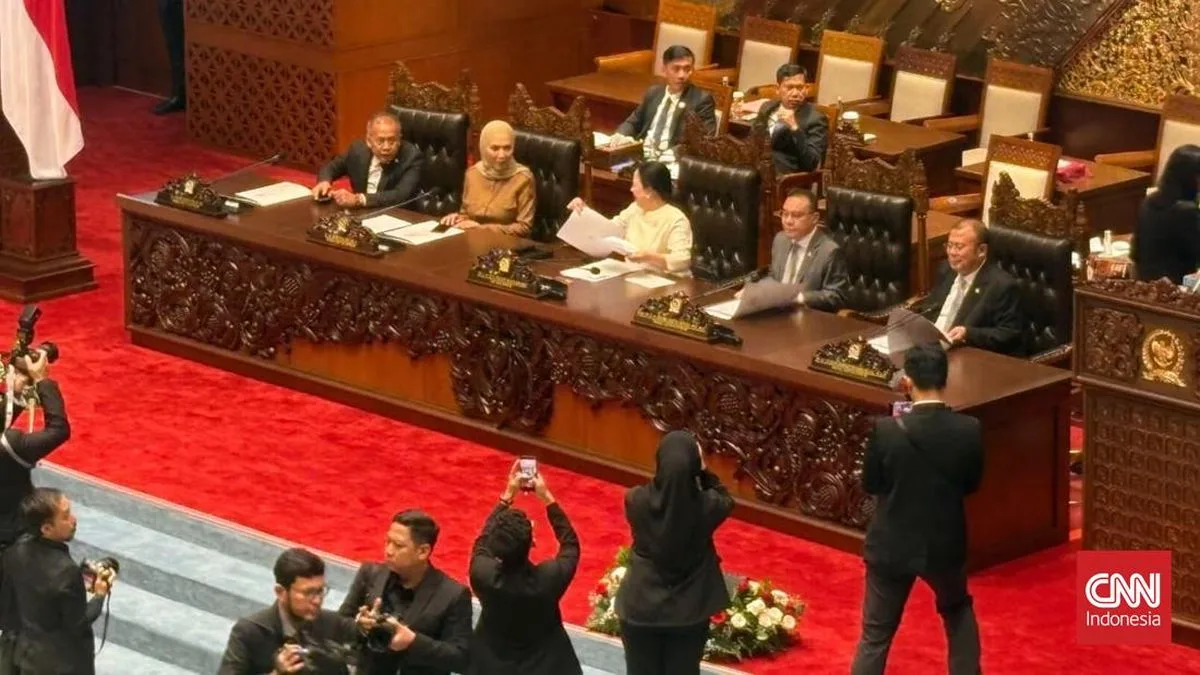
The House of Representatives (DPR) officially passed the Law on Asset Forfeiture Related to Corruption and Other Crimes at its 13th plenary session of the 2026-2027 Second Sitting Period on Thursday (19/11). The passage ends an 18-year wait since the bill first entered the legislative agenda in 2008 and marks a new milestone in Indonesia's fight against corruption and economic crime.
The session, chaired by DPR Speaker Puan Maharani, was attended by 361 of 573 lawmakers. All factions voiced approval with no dissenting votes. A member of the bill's working committee from the PKS faction, Nasir Djamil, called the achievement a stroke of luck for the public given how long the bill had been stalled in Senayan. Yet behind the euphoria, some quarters are flagging the absence of the illicit enrichment norm—the crime of officials unjustifiably increasing their wealth—which is seen as crucial for catching corrupt officials skilled at hiding assets.
Indonesia Corruption Watch (ICW) researcher Azhim argued that the DPR deliberately avoided regulating illicit enrichment because many current lawmakers and government officials have wealth increases they cannot account for. "They are unable to prove the origin of that wealth," he said. House Commission III chair Habiburokhman denied the allegation. He argued the concept is contentious and considered contrary to human rights. Commission III, he said, also studied practices in a number of countries that failed to apply a similar norm.
One breakthrough that has drawn praise is the expansion of forfeiture to the digital realm. Article 4 paragraph 3 explicitly mentions fraud and embezzlement using information technology, including online gambling, fraudulent investment schemes, hajj and umrah travel, and cryptocurrency. DPR Deputy Speaker Sufmi Dasco Ahmad stressed that online gambling kingpins and crypto fraudsters can now lose their assets through this mechanism. "Their assets can be seized under the Asset Forfeiture Law," Dasco said.
Even so, implementing the rule still leaves homework. Article 72 affirms the non-retroactive principle, so the law only applies to crimes committed after its passage. That means old, unresolved corruption cases cannot be pursued with this new instrument. In addition, the effectiveness of forfeiture depends heavily on the establishment of two bodies—the Asset Management and Forfeiture Agency and a supervisory body—which have a one-year deadline. Without both, the law cannot be enforced.
"We also compared practices in other countries, studying why the concept failed there," Habiburokhman said, explaining why Commission III refused to include the illicit enrichment norm.
From an anti-corruption perspective, the passage of this law does strengthen the state's weapon to seize the proceeds of crime. However, the absence of illicit enrichment means the regulation does not fully address the root of the problem: officials whose lifestyles far exceed their official income. A number of civil society organizations say the DPR missed the momentum to deliver a genuinely progressive breakthrough. They are urging that the norm be included through a future revision or set out in more technical implementing regulations.
Going forward, public attention will focus on two things: first, how quickly the government establishes an asset management body that is credible and free from political intervention; second, whether the law will be followed by a revision that accommodates illicit enrichment. Without both, the Asset Forfeiture Law risks becoming a paper tiger—big on paper, but blunt in practice. The question is, will the DPR and the government dare to go further to close the remaining gaps?