Mahfud MD Warns 9 December Vice Presidential Election Plenary Risks Legal Defect
Baca dalam 60 detik
- Mahfud MD menilai paripurna MPR pada 9 Desember 2026 berpotensi tidak sah jika Presiden belum menyerahkan dua nama cawapres hingga 19 November.
- Perbedaan tafsir soal definisi 'hari' dalam UU MD3 dan Tatib MPR menjadi inti persoalan: hari kerja, bukan hari kalender.
- Dengan hitungan 14 hari kerja, Mahfud menyarankan penundaan paripurna hingga Presiden menyerahkan nama cawapres, misalnya 10 Desember 2026.
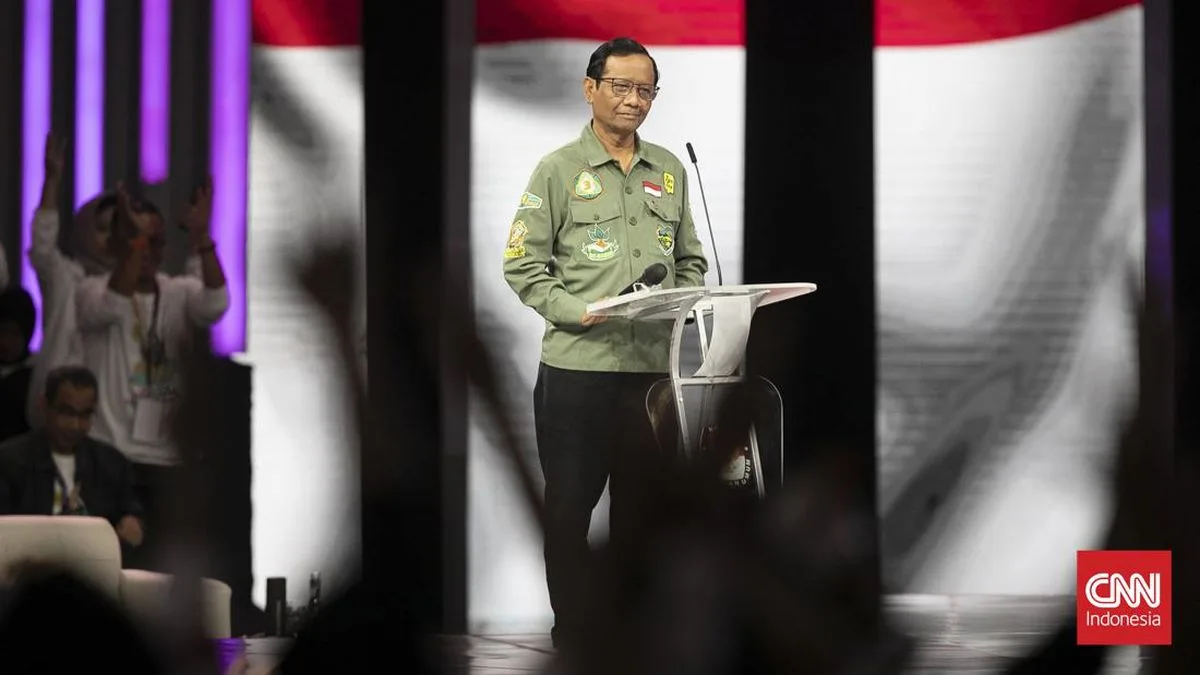
Constitutional law expert Mahfud MD has warned that the MPR plenary session to elect and inaugurate a vice president to replace Gibran Rakabuming Raka on 9 December 2026 risks being invalid. The warning arose because as of Thursday (19/11) midnight, President Prabowo Subianto had not submitted two vice presidential candidate names to the MPR.
In a post on his personal Instagram account on Friday (20/11), Mahfud explained that the 1945 Constitution requires the submission of a vice presidential replacement candidate no later than 14 days before the MPR session is held. However, according to him, the MD3 Law and MPR Standing Orders No. 1 of 2024 stipulate that "days" means working days, not calendar days. Consequently, the 14-day deadline before the plenary does not fall on 25 November, but had already passed on 19 November.
"If by yesterday at 00.00 WIB the President had not submitted two names of vice presidential candidates to replace Gibran, then the MPR may not be able to hold a session, and it would be invalid if it were still held on 9 December 2026," Mahfud said, as quoted from his statement.
Mahfud, who once led the Constitutional Court and served as Coordinating Minister for Political, Legal, and Security Affairs, considers the differing interpretations of the definition of a day to be no trivial matter. He warned that failure to meet the constitutional deadline could trigger a new and more complicated political dispute. Therefore, he suggested that the MPR postpone the plenary schedule until 14 working days after the President submits the two vice presidential candidate names.
"For example, if the President submits the names today, 20 November 2026, then the session is postponed to 10 December 2026. And so on, counting back 14 working days. If the President submits the names upon returning from China, the count is also 14 working days from the submission," Mahfud said.
According to Mahfud, the suggestion aims to synchronize three legal bases at once: the 1945 Constitution, the MD3 Law, and the MPR Standing Orders. He stressed that adjusting the timing this way is safer than forcing a schedule that has already lost its procedural footing. Most importantly, he said, the 60-day window since Gibran resigned remains a time limit that must not be violated.
This case highlights the vulnerability of schedule engineering in the process of replacing state officials. When even one stage is not fulfilled, the entire plenary sequence could potentially be challenged legally. For the public, the issue is not merely the date, but the certainty that the vice president to be inaugurated has strong constitutional legitimacy. The MPR and the Palace are now at a crucial point: choosing to postpone for the sake of procedural compliance, or proceeding with the schedule at the risk of a dispute later on.