Bitcoin Falls Below US$57,000, a Warning Signal for Global Risk Assets
Baca dalam 60 detik
- Harga Bitcoin merosot ke level terendah sejak September 2024, tertekan kenaikan imbal hasil riil obligasi AS.
- Liquidasi futures kripto mencapai US$2,4 miliar dalam sehari, dengan posisi long Bitcoin menyumbang lebih dari US$1 miliar.
- Pasar saham teknologi, emas, dan tembaga juga melemah, menandakan pergeseran sentimen risiko secara luas.

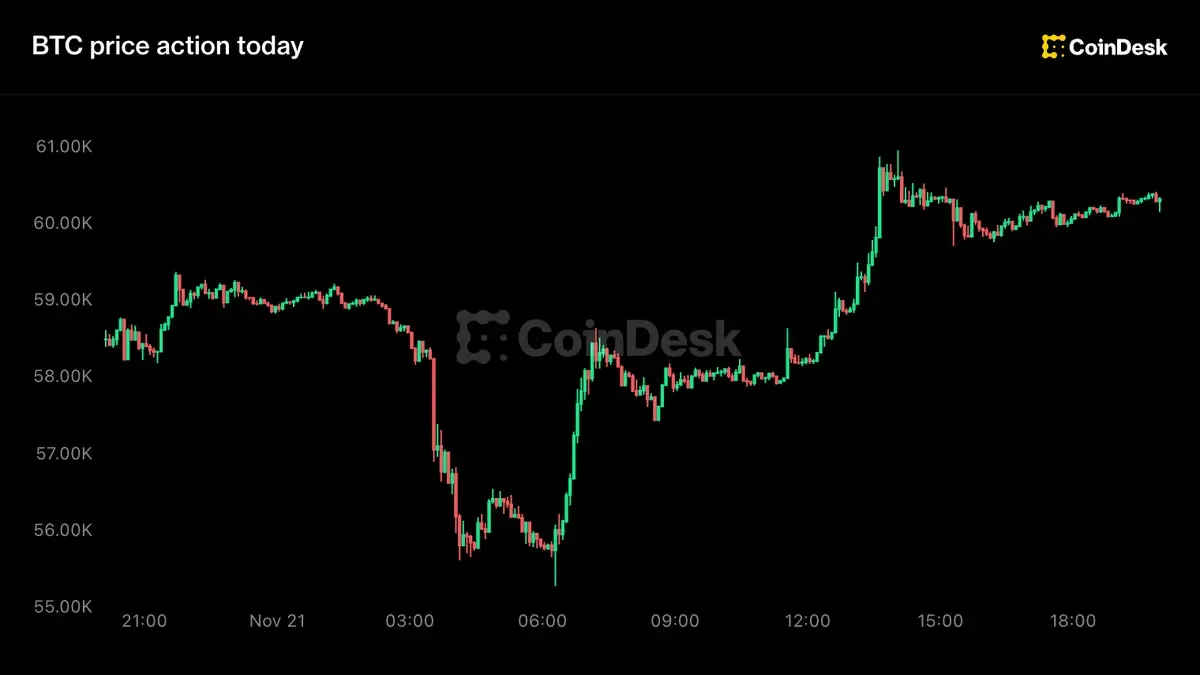
Bitcoin has again broken through an important psychological level, falling below US$57,000 on Friday (21/11/2026), its lowest level since September 2024. The decline extends a bearish trend that has been underway since a peak above US$126,000 last October, and marks a new phase of pressure for risk assets worldwide.
After briefly recovering and surpassing its 50-week moving average in September—which sparked hopes of a new rally—that optimism has now faded. Bitcoin has fallen 28% over the quarter, and its current position is below a level last seen more than two years ago. The weakness is not an isolated phenomenon: technology shares, gold, copper, and Asian equities were also hit during the week. The Nasdaq index plunged more than 4% on Friday to its lowest level since April, while gold fell to its lowest point since September 2025.
Analysts highlight the rise in real (after-inflation) yields on US government bonds as the main trigger. Higher real yields increase the appeal of bonds as a safe asset, making non-yielding assets such as Bitcoin and gold less attractive. The pressure is compounded by more hawkish monetary policy signals from the Federal Reserve, which have led investors to reassess the valuations of growth assets, crypto, and other long-duration instruments.
This wave of liquidations shows how skewed the market's leveraged positions were toward the bullish side. Most market participants bet on the continuation of the bull market and did not anticipate Bitcoin falling below US$60,000. When the price fell, leveraged long positions were forced to close, triggering further selling and creating a vicious circle that deepened the correction.
"The rise in real yields has fundamentally changed the risk calculation. Assets that do not generate yield now have to compete with government bonds offering positive real returns," said a crypto market analyst, as quoted from a Coinglass report.
On the other hand, data show a structural shift in trading activity. Spot volume declined, but derivatives volume actually increased, especially for perpetual contracts linked to real-world assets (RWA). The derivatives share of total centralized exchange volume reached 79.1% in October, indicating that the market is increasingly dominated by leveraged instruments that are vulnerable to extreme volatility.
For Indonesian investors, the direct impact may be limited because domestic crypto exposure is still relatively small. However, global pressure on risk assets can affect capital flows to emerging markets, including Indonesia. A weaker rupiah and higher domestic bond yields could be consequences if global investors continue to reduce positions in risk assets. In addition, for domestic crypto market participants, this massive liquidation is a reminder of the importance of risk management and understanding the dynamics of leverage.
Going forward, market attention will focus on the direction of The Fed's policy and the movement of real yields. If inflation pressure eases and interest rate expectations soften, risk assets may find a stabilizing point. However, if hawkishness continues, Bitcoin and other crypto assets could test lower support levels. The question is whether the market has deleveraged enough to absorb the next shock, or whether there are still long positions waiting to be liquidated?