Bitcoin Lags US Stock Rally Ahead of Inflation Release as ETFs See Seven Straight Days of Outflows
Baca dalam 60 detik
- Harga Bitcoin bertahan di kisaran US$74.200, tertinggal dari lonjakan S&P 500 dan Nasdaq yang mencetak hari terbaik sejak April.
- Arus keluar bersih US$201 juta dari ETF Bitcoin spot AS pada Senin, dengan IBIT BlackRock mencatat redemption tujuh sesi berturut-turut.
- Pasar menanti data CPI Oktober yang diprediksi melambat; hasilnya akan menentukan arah suku bunga dan daya tarik aset kripto dalam jangka pendek.
Bitcoin traded around US$74,200 in the early hours of Tuesday UTC, after touching a low of US$74,100 in the overnight session. The limited move came as market participants awaited the release of the US consumer price index (CPI), which is expected to show a slowdown in October inflation. The data will determine the direction of the Federal Reserve's interest rate policy, which has been one of the main drivers of risk assets, including cryptocurrency.
Unlike Bitcoin, Wall Street stocks posted a significant rebound. The S&P 500 recorded its best daily gain since April 8, while the Nasdaq Composite jumped 2.7%. The rally recovered part of the losses from last week's massive sell-off, which was triggered by concerns over the valuations of artificial intelligence-related technology stocks. However, the euphoria in the stock market did not spill over into Bitcoin, which was nearly flat over the past 24 hours.
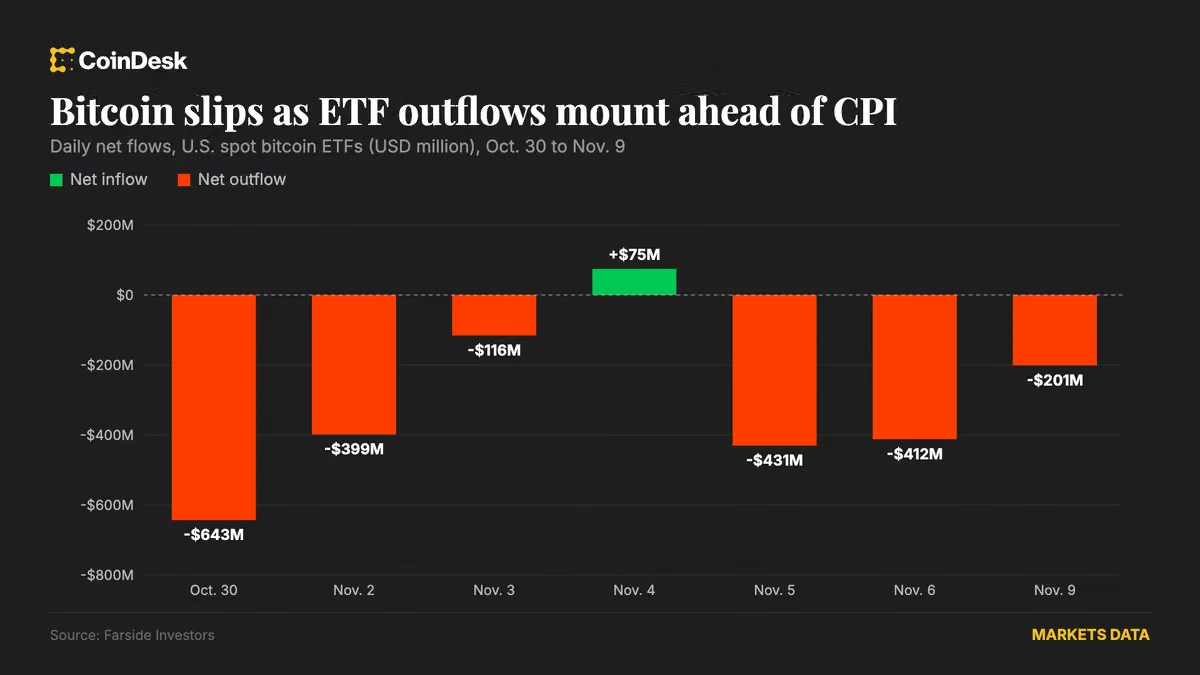
Selling pressure in the crypto market was also reflected in outflows from US spot Bitcoin exchange-traded funds (ETFs). According to Farside Investors data, these products recorded net redemptions of US$201 million on Monday. BlackRock iShares Bitcoin Trust (IBIT) was the largest contributor with outflows of US$213.2 million, marking the seventh consecutive session of withdrawals. This phenomenon indicates that institutional investors tend to reduce their exposure to Bitcoin ahead of macro risk events, even though interest in other crypto assets such as memecoins is still visible.
The CPI release at 13:30 UTC is the main focus. Economists surveyed by Dow Jones project last month's headline inflation at 0.3%, slowing from 0.6% in September, while core inflation is expected at 0.2%, down from 0.3%. If the data meets or comes in below expectations, the market may increase bets on interest rate cuts, which historically have been a positive catalyst for risk assets. Conversely, a hotter reading could strengthen the US dollar and push Bitcoin prices down further.
On the other hand, the stablecoin market backed by real-world assets (RWA) showed resilience with yields of 5–7% from real credit, while crypto funding compressed to around 4%. The GENIUS initiative, which pushes yields off-chain, also expanded the total addressable market (TAM) to US$4 billion within three years. This development shows that innovation in the decentralized finance sector continues, even as the Bitcoin spot market faces short-term pressure.
“The market is waiting for clarity on the direction of inflation. Bitcoin tends to lag because investors prefer to lock in profits in more liquid stocks before the data comes out,” said a crypto market analyst, as quoted from CoinDesk's daily report.
For Indonesian investors, this dynamic warrants attention because Bitcoin and other crypto assets have become legally recognized investment instruments in the country. Price fluctuations triggered by US macro data can affect domestic retail portfolios, especially those using local exchange platforms. In addition, global ETF outflows can be an early signal of a sentiment shift that may affect national crypto market liquidity, although fundamentally the Indonesian market is still driven by institutional adoption and evolving regulation.
Going forward, attention will focus on the market's reaction to the CPI figures and whether Bitcoin can break through the nearest resistance level. If inflation data eases and expectations of interest rate cuts strengthen, there is a chance for Bitcoin to catch up with stocks. However, if ETF outflows continue, selling pressure could persist longer. The question is, will investors return to crypto assets after macro uncertainty subsides, or will they keep leaning on conventional instruments that are rallying?