Harris Urges London and Dublin to Agree on Border Poll Criteria, a New Signal Toward a United Ireland
Baca dalam 60 detik
- Wakil PM Irlandia Simon Harris menilai dialog London-Dublin soal ambang batas referendum penyatuan Irlandia sebagai langkah tata kelola yang wajar.
- Menteri Irlandia Utara Chris Bryant menegaskan kewenangan penuh ada di tangannya dan belum melihat gelombang dukungan untuk poll.
- Partai-partai unionis menolak mentah-mentah, sementara Sinn Féin menyambut baik; dinamika ini bisa memanaskan perdebatan konstitusional menjelang 2027.
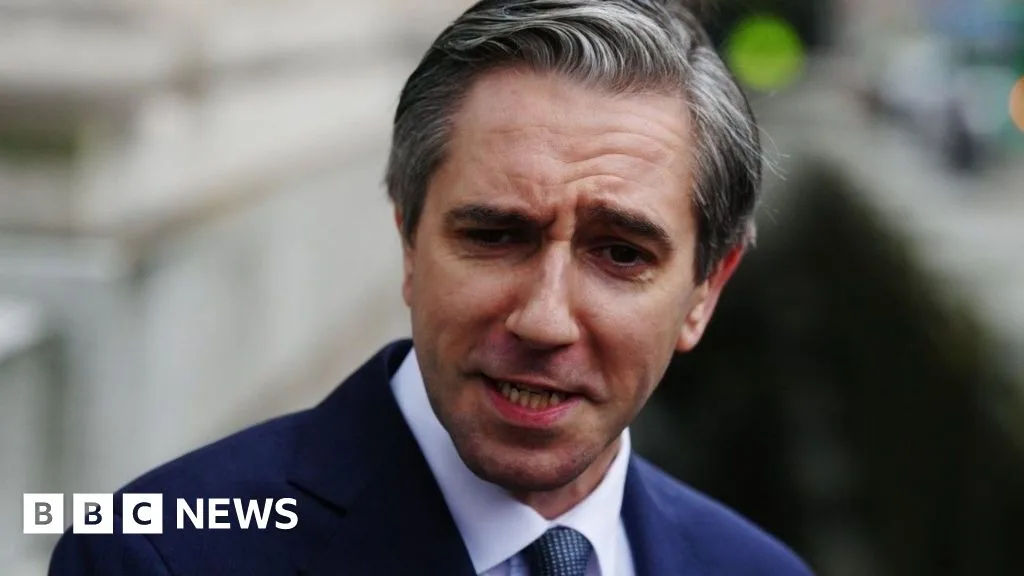
Ireland's Tánaiste (Deputy Prime Minister) Simon Harris has openly pushed for formal talks between the British and Irish governments on the criteria for holding a border poll—a referendum to determine Northern Ireland's status. The statement is the latest signal that Dublin no longer wants to be a spectator in a constitutional debate long dominated by London.
Harris, who also leads Fine Gael, said he and Taoiseach Micheál Martin share the same view. According to him, a shared understanding of what could serve as parameters for a vote would be healthy governance. He even predicted that a joint proposal from the Irish government on preparations for Irish unity could be formulated by the end of this year.
The statement came in response to comments by Northern Ireland Secretary Sir Chris Bryant, who stressed that the decision to call a border poll rests entirely with him. Bryant, in an interview with RTÉ, said he had not yet detected public sentiment demanding such a referendum. He would only call a poll when he was confident a majority in Northern Ireland genuinely wanted to join the Republic of Ireland.
Bryant is sticking to the wording of the Good Friday Agreement, which places full authority with the Northern Ireland Secretary. He rejected the notion that Dublin has a direct role in determining the timing of a referendum. But Harris is not challenging that provision. What he questions is how the criteria are applied. "There is no dispute over the content of the agreement, but its application needs a better understanding," he said, as quoted by BBC News NI.
Behind the statement, Fine Gael has published a blueprint for preparing for Irish unity. The document proposes an independent but government-supported cross-party forum, as well as the appointment of a junior minister specifically handling north-south relations. An economist advising Harris has even calculated that the first-year fiscal cost of reunification could reach €25 billion—a figure that has become an important reference point in public debate.
Harris's move drew mixed responses from parties in Northern Ireland. Sinn Féin leader Michelle O'Neill welcomed the call to clarify the criteria and said London could no longer ignore historic change. By contrast, DUP leader Gavin Robinson stressed that his party was not interested in "a conversation that will end Britain as we know it." UUP leader Jon Burrows called Fine Gael's plan a "personal constitutional project" and refused to take part. Alliance leader Naomi Long promised to engage respectfully, while SDLP leader Claire Hanna stressed that a new Ireland must be built, not merely a reversal of partition.
"We no longer live on an island where one constitutional view is worth more than another. Both views are legitimate, and just as nationalists live in a Northern Ireland that is part of Britain, it may be that in the future unionists will live in a Northern Ireland that is part of a united Ireland." — Simon Harris
Harris stressed that disagreement is everyone's right, but he asked that the debate be conducted respectfully. He also implied that the British government was likely reluctant to set a threshold because it would reduce their control over the process. Nevertheless, Dublin's push has at least injected new momentum into the broader conversation about unification.
For Indonesia, the dynamics in Ireland can serve as a mirror of how a country with a history of division manages a constitutional transition peacefully. The principle of subsidiarity and the consultative forum proposed by Fine Gael resemble the dialogic approach often advocated in resolving regional conflicts. But the most crucial question is how London and Dublin maintain political stability in a region that was once scarred by decades of violence.
Going forward, the public will be watching to see whether Dublin's joint proposal actually materializes before the end of the year. If it does, pressure on London to at least open a dialogue on the criteria will grow. The question is whether Downing Street will maintain its silence, or begin to consider sharing parameters for the sake of long-term stability.