Burnham Claims Rp360 Trillion Deal with European Union, but Opposition Party Calls It 'Betrayal'
Baca dalam 60 detik
- Inggris dan Uni Eropa sepakat menghapus pemeriksaan ekspor pangan dan meluncurkan skema mobilitas pemuda, dengan potensi tambahan £17 miliar per tahun bagi ekonomi Inggris.
- Perdana Menteri Andy Burnham menyebut kesepakatan ini sebagai 'hari baik' dan membuka jalan bagi hubungan yang lebih erat, sementara oposisi menuduh pemerintah menyerahkan kedaulatan.
- Legislasi implementasi akan diajukan pekan depan, tetapi kesepakatan tentang biaya kuliah masih alot dan menjadi ujian bagi stabilitas politik Inggris ke depan.
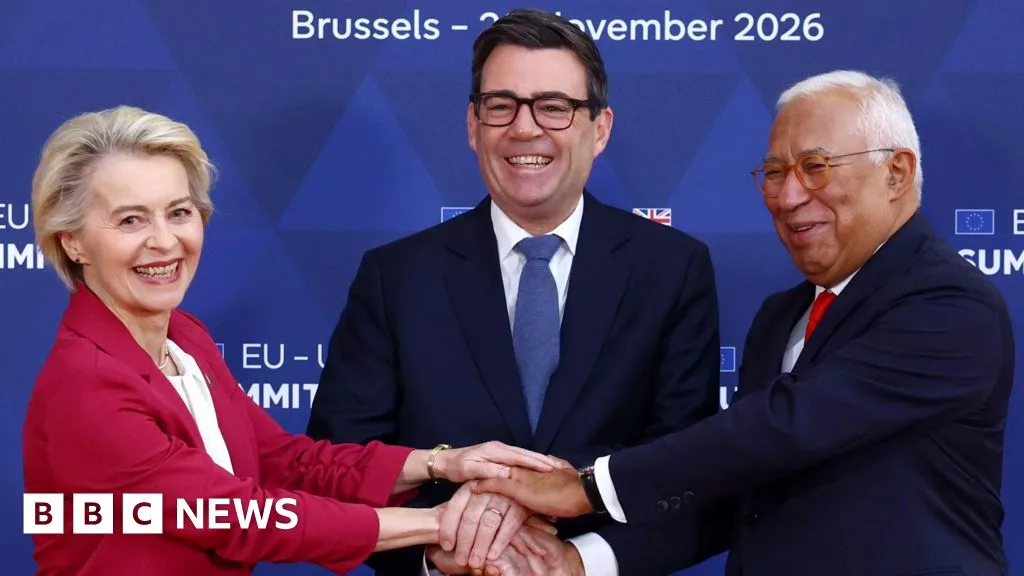
UK Prime Minister Andy Burnham announced a new agreement with the European Union covering the removal of most food export checks, the linking of emissions trading systems, and a youth mobility scheme. The deal reached in Brussels on Friday (local time) is described as a significant step in resetting post-Brexit relations, with a potential additional boost of up to £17 billion (around Rp360 trillion) per year for the UK economy according to Treasury analysis.
Burnham, who arrived in Brussels to finalize the latest stage of the reset policy begun under his predecessor, Sir Keir Starmer, said it was a 'good day' for Britain and Europe. He stressed that the deal not only reduces costs for businesses but could also lower prices for consumers. However, he acknowledged that this step may be the maximum achievable in the current parliament, and added that discussions on the long-term relationship would take place ahead of the next election.
The deal was backed by European Council President António Costa, who said the EU remained 'open to the closest possible relationship' with the UK. European Commission President Ursula von der Leyen called the summit a 'turning point' and expressed confidence that a solution on tuition fees would be found. However, the domestic opposition immediately criticized it sharply. Conservative leader Kemi Badenoch called the deal 'unfair' because British farmers would have to follow Brussels rules and more foreign young people would compete with young British workers. She also questioned the £17 billion figure, claiming that the modeling she had seen actually showed a 0.0% impact on GDP.
"This is a betrayal of the British people," said Nigel Farage of Reform Party, who accused Burnham of being a 'total fraud' and called Friday 'a very good day for the EU'.
Meanwhile, Liberal Democrat leader Sir Ed Davey welcomed the youth mobility scheme but insisted it was not enough. "We need a new deal that actually works for Britain, and fast," he said. The debate over UK-EU relations also raises questions about sovereignty and shared rules, especially since the UK will be a 'rule taker' from Brussels on food and emissions standards, something Brexit critics have highlighted.
For Indonesia, this agreement could be an interesting precedent in managing trade relations with a large economic bloc. The UK and the EU show that closer cooperation can be achieved even after a political split, with compromises on regulatory standards. Indonesia itself is exploring various trade agreements, including with the EU through the Indonesia-EU CEPA, which is still in progress. The gradual approach taken by London—separating food, mobility, and emissions issues—may offer lessons on how to manage complex negotiations without sacrificing national interests.
Going forward, legislation to implement the agreement will be submitted to the UK parliament next week. However, several hurdles remain, especially the agreement on tuition fees, which is expected to be tough talking over the next six months. With an election due by August 2029 at the latest, Burnham promised that 'the British people will be the boss' in determining the direction of the long-term relationship. Whether this deal will become the foundation for a more stable relationship, or instead become a source of new domestic political conflict, remains a question that will be tested in the coming months.