Bitcoin Rebounds 9% Above US$60,000 After US$1.8 Billion Liquidation, the Real Test Begins Monday
Baca dalam 60 detik
- Harga Bitcoin merangkak naik melewati ambang US$60.000 setelah sempat menyentuh level terendah dua tahun di US$55.130, memicu gelombang likuidasi leveraged senilai total US$1,8 miliar.
- Pembersihan posisi taruhan naik di kisaran US$59.000–US$62.000 dinilai menghilangkan sumber tekanan jual paksa, tetapi arus keluar ETF spot dan pelemahan saham teknologi masih membayangi.
- Pembukaan pasar saham AS pada Senin menjadi penentu apakah reli ini berlanjut atau sekadar pantulan teknis jangka pendek.
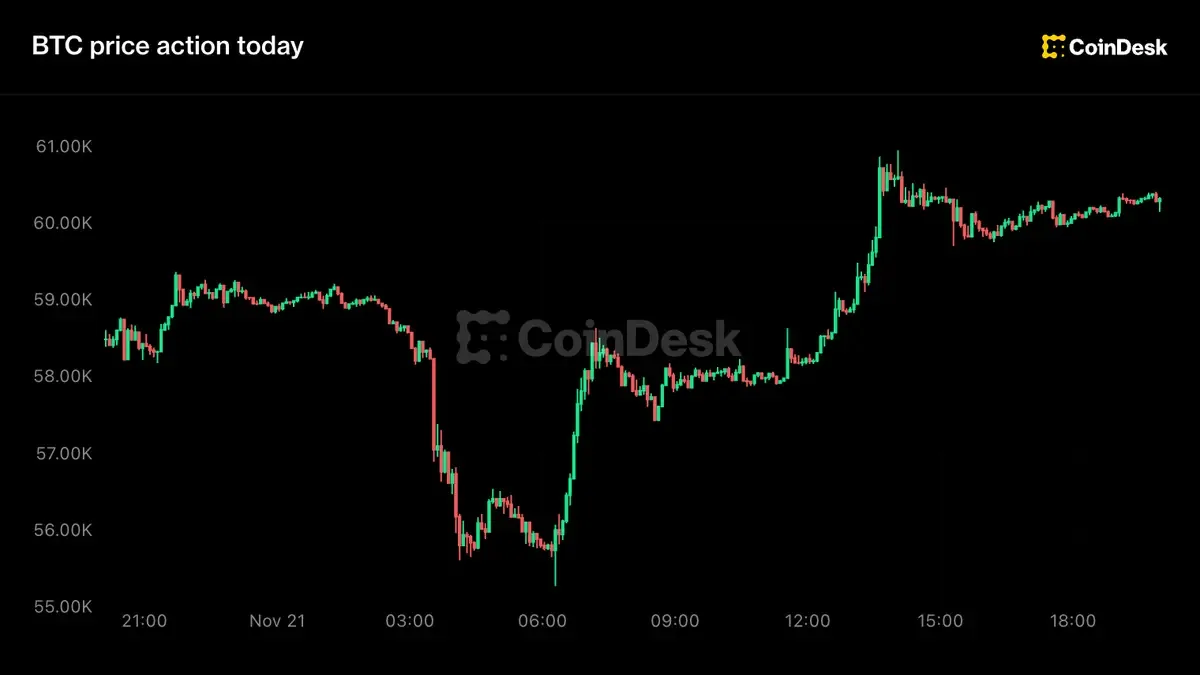
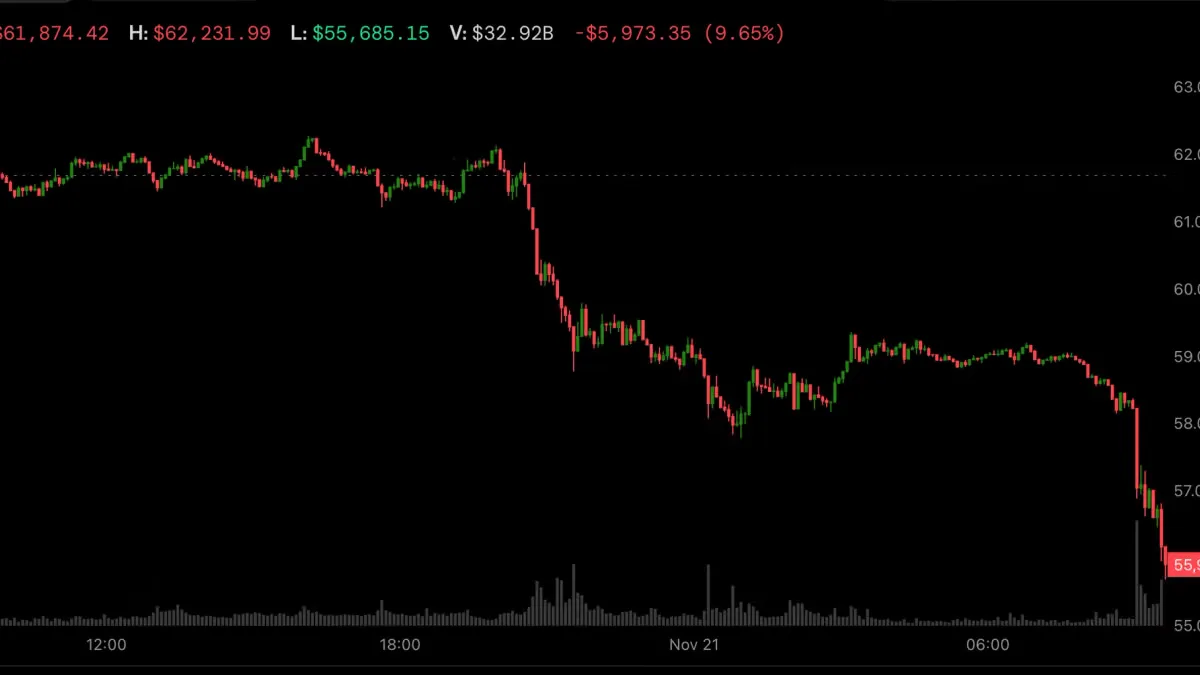
Bitcoin's price broke back above the psychological US$60,000 level on Friday local time, reversing a sharp decline that had dragged the largest cryptocurrency to its weakest point since September 2024. From a trough of US$55,130, the digital currency gained more than 9% and traded around US$60,300, up about 1.5% over the past 24 hours.
The bounce came after the crypto derivatives market suffered one of its largest liquidation episodes in recent months. CoinGlass data recorded about US$1.8 billion in leveraged positions wiped out in a single day, with US$1.3 billion of that being bets that prices would keep rising. In other words, the majority of the losses were borne by those betting on the bullish direction.
Glassnode, an on-chain analytics firm, had for months mapped a large concentration of Bitcoin futures contracts in the US$59,000–US$62,000 range. Last Friday, the largest cluster on that liquidation heatmap was finally swept clean. According to Glassnode, the disappearance of those positions actually removed the "main source of forced selling pressure" below the market price, giving the price room to breathe.
Even so, this recovery does not necessarily mark the end of the pressure. CryptoQuant analyst Darkfost called Friday's sell-off an "extreme capitulation". Over a week, Bitcoin holders realized losses of more than US$11.3 billion—roughly eight times the profits booked in the same period. The figure reflects how deep the wounds suffered by short-term investors are.
Major altcoins also strengthened. Ether rose about 3% to US$1,680, while Solana gained 2.3% to US$71. However, these gains were moderate compared with Bitcoin's surge, signaling that risk appetite in the crypto market has not fully recovered.
"For BTC, a meaningful recovery likely requires stabilization in tech stocks, a decline in interest rate volatility, and evidence that institutional flows are starting to return. Until then, a rally driven by short covering may struggle to extend into a sustained advance," wrote QCP Capital, a Singapore-based trading firm.
QCP's warning is well founded. On Friday, the Nasdaq Composite index plunged more than 4%, approaching bear market territory. Corrections in the US tech stock market tend to spill over into crypto assets, which in recent years have become increasingly correlated with growth stocks. The US market open on Monday will be the first test for this weekend's rally.
In addition, institutional flows through spot Bitcoin ETFs still point outward. Over the past week, those products recorded net outflows of about US$1.1 billion. The final figures for Friday's trading, especially from BlackRock's IBIT, the largest ETF by net assets, are still awaiting updates. If outflows continue, selling pressure from the institutional side could strengthen again.
On the market structure side, October data showed an interesting shift: spot volume fell 9.7% to US$1.02 trillion, while perpetual volume for real-world assets (RWA) jumped 24.1% to US$611 billion. The derivatives share of total centralized exchange volume also rose to 79.1%. This means the crypto market is increasingly driven by leveraged instruments, making price moves more erratic and vulnerable to cascading liquidations.
For Indonesian investors, this dynamic is relevant given the growing participation of domestic retail investors in crypto assets through licensed exchanges. High volatility and the dominance of derivatives serve as a reminder of leverage risk, especially when global sentiment is fragile. Domestic regulators themselves continue to tighten oversight, but education on risk management remains a shared task.
Looking ahead, the key question is not simply whether Bitcoin can hold above US$60,000, but whether institutional flows will reverse direction. Without the return of ETF funds and stabilization in global stock markets, this rally risks being nothing more than a technical bounce. Monday will be the first stage for testing how strong the foundation of this recovery is.