World's Largest Wave Test: Salt Marshes Proven to Buffer Extreme Storms
Baca dalam 60 detik
- Eksperimen Delta Flume di Belanda memaparkan blok rawa asin utuh pada gelombang hingga 4,5 meter selama 21 jam.
- Erosi permukaan rata-rata hanya 7 mm dan hingga dua pertiga vegetasi bertahan, jauh di bawah perkiraan para peneliti.
- Temuan yang akan terbit di Nature ini memperkuat argumen menjadikan rawa asin sebagai infrastruktur pertahanan pesisir alami.
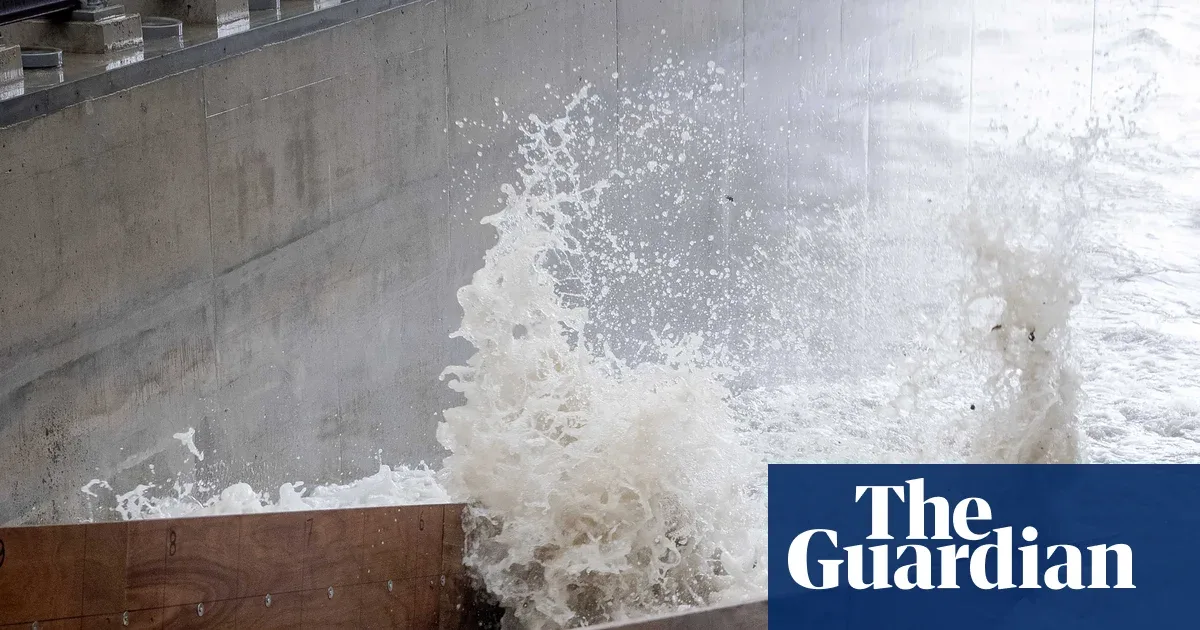
Coastal salt marshes turn out to be far more resilient to storm waves than previously estimated. A simulation using the world's largest wave machine in the Netherlands showed that the stretch of coastal vegetation lost only about 7 millimeters of surface after being hit by waves up to 4.5 meters high for 21 hours nonstop. The result is an important signal for countries with long coastlines, including Indonesia, which are beginning to rely on natural ecosystems as a bulwark against sea level rise.
The research was conducted at the Delta Flume, a hydraulic test facility outside Delft consisting of a concrete channel 300 meters long, 9.5 meters deep, and 5 meters wide. At one end, four giant pistons drive a wave board to produce a full-scale storm simulation. Unlike ordinary laboratory tests that use small models, the team placed intact blocks of salt marsh into the channel so that sediment behavior and vegetation roots were realistically represented.
What surprised the researchers was not only how small the erosion was, but also the ability of marsh plants to absorb wave energy. Until now, salt marshes have often been regarded as fragile ecosystems easily damaged by major storms. But data from the experiment show the opposite: the vegetation acts as a natural buffer that significantly reduces wave force before it reaches the shoreline. The findings are scheduled to be published in the journal Nature and are expected to spark new discussion among coastal planners.
For Indonesia, the implications cannot be ignored. As an archipelagic country with a coastline of more than 99,000 kilometers, Indonesia faces a real threat from sea level rise and extreme weather. Until now, the dominant approach has been building concrete dikes and seawalls. The Delta Flume test results provide a scientific basis for complementing hard infrastructure with green belts of mangroves and salt marshes. These ecosystems are not only cheaper but also provide additional services such as carbon sequestration and habitat for marine life.
"We were surprised to see how little damage the plants suffered and how effectively they dampened wave energy," said one of the researchers involved in the experiment, as quoted from a Guardian report.
Nevertheless, the researchers caution that the resilience of salt marshes depends heavily on local conditions: sediment type, vegetation density, and storm frequency. The Delta Flume simulation used marsh blocks that were still intact and healthy. In the field, marshes degraded by pollution, land conversion, or illegal logging may lose their protective capacity. Coastal restoration strategies are therefore a prerequisite for this finding to be operationalized widely.
The question ahead: will governments and development agencies begin allocating coastal protection budgets to salt marsh restoration, or continue relying on concrete that offers an instant sense of safety but at high cost? The answer will shape Indonesia's coastline in the coming decades.