PC Gamer Magazine's 2004 Archive Transformed into Giant Photo Mosaic Using Python and AI Studio
Baca dalam 60 detik
- Seorang staf PC Gamer mengubah seluruh arsip majalah edisi 2004 menjadi mosaik foto raksasa, dengan setiap halaman berfungsi sebagai piksel.
- Proyek ini memanfaatkan skrip Python buatan sendiri untuk analisis gambar, pencocokan warna, dan penjahitan, tanpa pemrosesan AI pada gambar akhir.
- Kendala teknis seperti batas ukuran JPG dan konsumsi memori 52 GB menjadi pelajaran berharga dalam pengolahan citra skala besar.
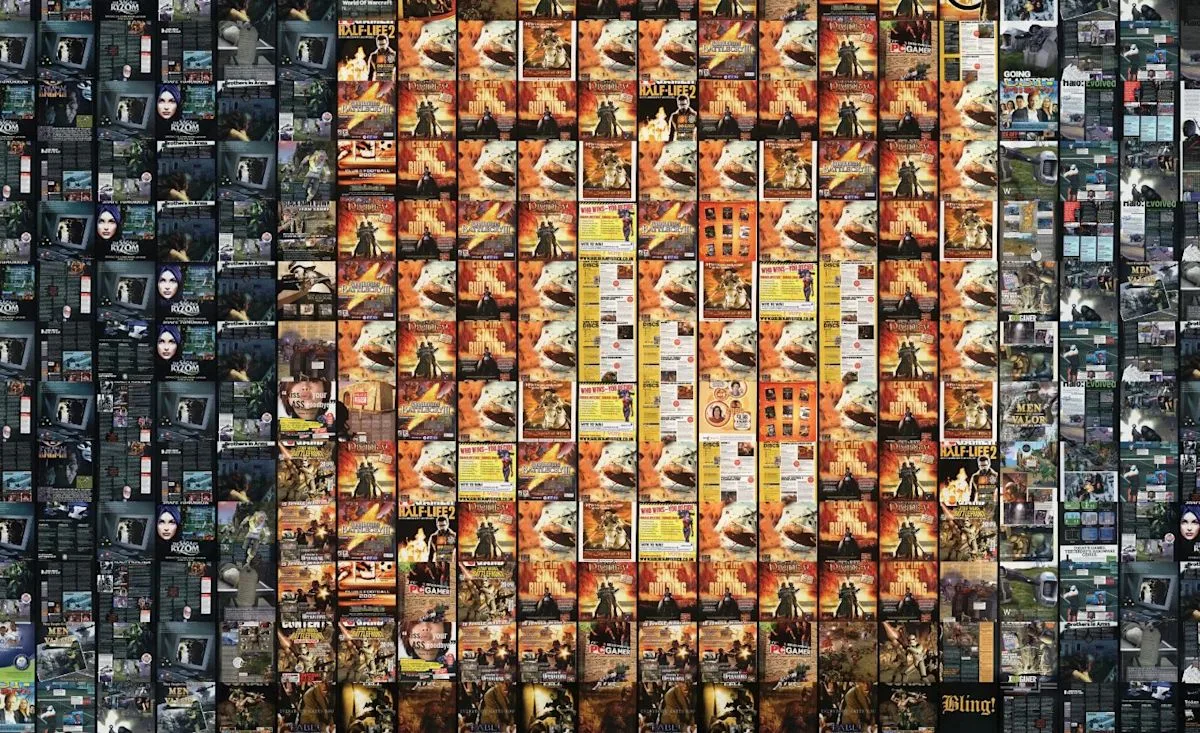
The complete digitized archive of PC Gamer magazine, from its inception until 2008, was recently utilized for an ambitious project: creating a giant photo mosaic where each pixel represents a page from the 2004 editions. This project was undertaken by PC Gamer's internal staff, leveraging custom-built Python scripts to process thousands of magazine pages into a single, cohesive image.
The mosaic was created by combining every issue of PC Gamer magazine throughout 2004, including special editions. Each page was scanned and processed using the Pillow (PIL) library for image analysis, pypdfium2 for rasterization, and numpy for color matching and image stitching. The result is an image that can be magnified up to 11,000%, although at maximum zoom levels, the resolution of individual pages begins to degrade.
Interestingly, this project did not involve generative AI in the creation of the final image. The developer only used Google AI Studio to assist in writing Python scripts that automated the image analysis and merging process. All computations were performed locally on a home PC, without additional AI processing on the generated imagery.
The process of creating this mosaic was not without its challenges. One major obstacle was the mathematical limit of the JPG format, which only supports a maximum dimension of 65,535 pixels. Initially, the developer attempted to create an image measuring 81,920 x 109,568 pixels, but this effort failed as it exceeded the limit. Ultimately, ambitions had to be scaled back so that the image could be saved in JPG format.
Furthermore, memory consumption became a serious issue. The Python script running the entire mosaic process reportedly consumed up to 52 GB of RAM, causing the PC system to slow down drastically. The developer monitored performance via Task Manager to ensure no system damage occurred. This experience provided insight into the hardware limitations in large-scale image processing.
"I learned a lot from this process, especially about the mathematical limits of JPG file sizes," said the project developer.
To display the mosaic without burdening web pages, the developer used the open-source viewer OpenSeadragon, which supports deep zooming via the Deep Zoom API (DZI). This approach allows users to explore image details without having to download an 800 MB file. Nevertheless, the developer considered switching to the PNG format, which has no size limits, but was concerned about generating multi-gigabyte files.
This project demonstrates how print media archives can be revitalized through image processing technology. In Indonesia, similar initiatives could be applied to old magazine or newspaper archives for digital preservation and educational purposes. For example, the National Library or historical communities could transform their collections into interactive mosaics appealing to younger generations. However, limitations in computational and storage resources remain a primary challenge.
Looking ahead, the developer is open to creating similar mosaics from other years of PC Gamer editions. He invites readers to submit suggestions via the comment section. This step not only preserves the magazine's legacy but also encourages creative exploration in digital archiving. Will similar technology be adopted by other media to revive their old content?