
Canaan Sells Bitcoin to Fund Share Buyback as Rig Revenue Plunges 96%
Baca dalam 60 detik
- Canaan meluncurkan program buyback senilai US$20 juta di bawah otorisasi US$100 juta, dengan opsi menjual kepemilikan kripto untuk mendanai pembelian kembali saham.
- Pendapatan bisnis perangkat keras anjlok 96% menjadi US$4,8 juta pada kuartal III, sementara operasi penambangan sendiri menghasilkan US$9,5 juta.
- Saham CAN merosot sekitar 75% sepanjang tahun ini, dan sebagian besar kas serta cadangan Bitcoin perusahaan terikat kewajiban.
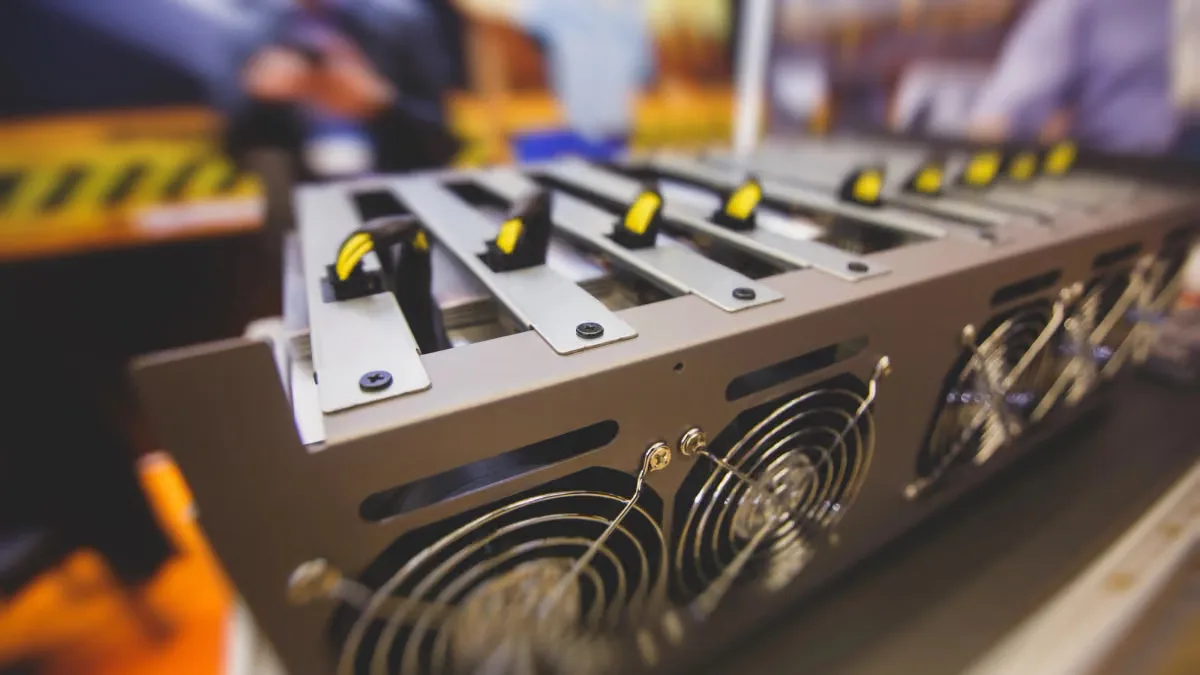
Bitcoin mining machine maker Canaan Inc. (CAN) has chosen a controversial path to prop up its share price: selling the cryptocurrency assets it holds to finance a share buyback. The move comes after revenue from hardware sales collapsed 96% in Q3 2026, forcing the company to reassess its liquidity strategy.
The company announced a US$20 million buyback program on Tuesday (11/11), part of a larger US$100 million authorization approved by the board of directors on 6 November. Management said it will become more aggressive in repurchasing shares once funds are available. The signal comes amid severe market pressure: CAN shares have fallen about 75% since the start of the year through last Wednesday's close.
Canaan's sharp share decline reflects a broader crisis in the crypto mining hardware sector. The company's hardware business booked only US$4.8 million in revenue in Q3, down from US$118.6 million in the same period a year earlier. Canaan blamed weakening demand and lower selling prices. Ironically, the company's own mining unit posted US$9.5 million in revenue—nearly double the hardware revenue—showing that mining operations remain the main pillar.
Canaan CEO Nangeng Zhang stressed that the company will maintain its long-term digital asset treasury while selectively monetizing crypto holdings to fund share buybacks. The statement underscores the dilemma facing the company: on one hand it wants to keep crypto reserves as a strategic asset, on the other it needs to maintain investor confidence in a share valuation seen as undervalued.
Previously, in an October report, Canaan disclosed it had sold 3,952 ETH and 54.5 BTC worth a total of about US$13.9 million. Some US$5.4 million of the proceeds was used to buy back 13.6 million American Depositary Shares (ADS) at the end of August. A similar move is now being repeated on a larger scale, even though most of the company's treasury is tied up.
As of 30 September, Canaan held 1,875.5 BTC. Of that, 1,258 BTC was pledged as loan collateral, and 100 BTC was placed in derivative products. Only 517.5 BTC was recorded directly as crypto assets, valued at US$43.7 million at the end of the quarter. On the cash side, the company had US$72.8 million in cash and restricted cash, but US$50 million of that supports a letter of credit for infrastructure commitments, leaving about US$22.8 million freely usable.
Despite posting a net profit of US$8 million in the quarter, Canaan actually recorded an operating loss of US$42.9 million. The profit emerged thanks to gains from the revaluation of crypto assets and derivative instruments, reflecting higher Bitcoin prices at the end of the quarter. Management believes the stock market has not yet priced in the company's growth prospects, so the buyback is seen as a way to deliver returns to shareholders.
"We maintain a long-term digital asset treasury while selectively monetizing crypto holdings to fund share buybacks," said Canaan CEO Nangeng Zhang.
The buyback authorization is valid for 12 months, and the company may adjust purchases according to operational and funding needs. However, the move raises questions about capital allocation priorities: does the buyback genuinely enhance long-term value, or does it drain liquid assets that should be used for product research and development amid fierce competition?
For Indonesia, Canaan's dynamics could serve as a mirror for the growing domestic crypto mining industry. Although Indonesia's market scale is not yet as large as that of the United States, falling global hardware prices can affect the import cost of mining rigs. In addition, Bitcoin price volatility and global monetary policy will continue to be determining factors in the competitiveness of local miners. Domestic regulators need to watch this trend so the national crypto ecosystem does not get stuck in the same boom-bust cycle.
Going forward, the market will watch whether Canaan's move is followed by other mining companies such as MARA, which previously also sold most of its Bitcoin holdings to strengthen its balance sheet. If the trend of selling crypto assets to fund buybacks spreads, it could signal a shift in priorities in the mining sector—from asset accumulation to strengthening capital structure. The question is whether this strategy is enough to reverse negative sentiment toward Canaan's shares, or whether it is instead a signal that the industry is in a painful consolidation phase.


