
BTCS Sells Ether at a Loss to Keep US$64 Million Aave Loan Healthy
Baca dalam 60 detik
- BTCS, perusahaan publik pemegang ether, menjual sebagian asetnya di bawah harga perolehan untuk menghindari likuidasi pinjaman DeFi senilai US$64 juta.
- Utang perusahaan di protokol Aave melonjak dari hanya US$320 ribu pada April 2025 menjadi US$64,1 juta per November 2026, dengan jaminan 46.676 ETH.
- Dengan kas hanya US$463 ribu dan sebagian besar aset digital terkunci sebagai kolateral, posisi BTCS sangat rentan jika harga ether terus turun mendekati ambang likuidasi.
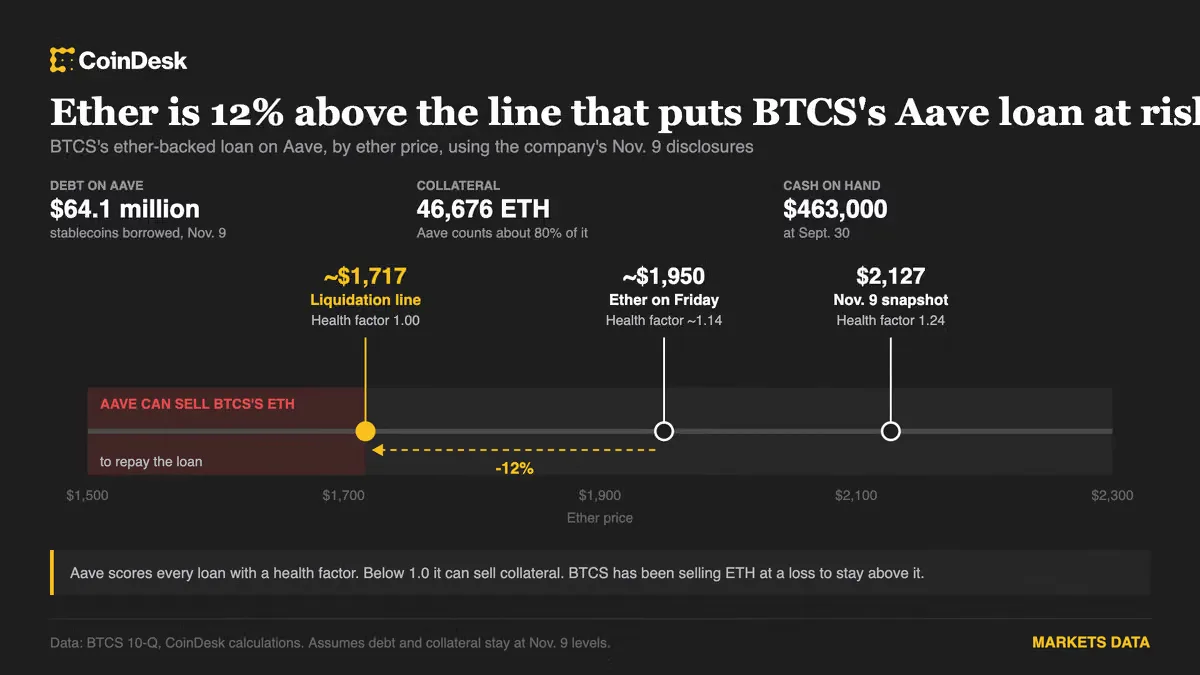
BTCS, a Nasdaq-listed company that holds ether as its main asset, has taken a bitter step: selling part of its ETH holdings below its purchase price. The move was made to keep a US$64 million loan on the decentralized lending platform Aave from sliding into liquidation.
In a quarterly report released Thursday (12/11), the company disclosed that as of November 9, 2026, it had about US$64.1 million in obligations on Aave, including accrued interest. The debt is secured by 46,676 ETH which, at the company's reference price of US$2,127 per coin, is worth about US$99.3 million, or 155% of the loan value.
"The ETH sales were executed at prices below the original cost basis as part of active management of the collateral level and health factor associated with the DeFi loan arrangement," BTCS management wrote in its statement. However, the company did not specify how much ether was sold for that purpose or what portion of the realized loss came from those transactions.
BTCS's move reflects the growing pressure on crypto treasury companies that build positions with debt on decentralized finance protocols. Unlike conventional banks, Aave has no loan officer to call in a crisis. The protocol automatically and continuously assesses each loan through a "health factor"—a ratio comparing the collateral value, after adjusting for the weights Aave permits, against the debt. If the score falls below 1, the protocol can automatically sell part of the collateral to repay the loan.
According to CoinDesk's calculations, assuming debt and collateral remain unchanged, Aave recognizes about 80% of the ETH BTCS deposited. At the November 9 figures, the loan's health factor was around 1.24, placing the liquidation threshold at about US$1,717 per ether. Last Friday, ether traded around US$1,950—about 12% above that line, but well below the US$2,127 reference price BTCS used in its report. The company's position may have changed after that date.
Compounding the situation, BTCS has almost no cash buffer. At the end of September, the company's cash was only about US$463,000. Management also stated that a "significant majority" of its digital assets are placed on Aave as collateral, so those coins are locked until the debt is repaid. This creates a double dependency: the company cannot freely sell assets to obtain emergency liquidity, while the cash on hand is very thin.
BTCS's debt surge happened in a short time. When it first disclosed its position on Aave in April 2025, the company had borrowed only US$320,000 against 446 ETH. By August 2026, its debt had swollen to US$53 million with collateral of more than 46,500 ETH. Since early 2025, total stablecoin borrowing reached about US$152.4 million—dominated by Tether (USDT) and Aave's own dollar token, GHO—with repayments of about US$89.4 million.
BTCS's board of directors set a loan-to-value (LTV) ratio cap of 50% for new loans on Aave, meaning the company may only borrow half the value of its collateral. But a decline in ether's price after the loans were taken automatically pushes that ratio past the limit. In that situation, BTCS must add ETH, repay part of the debt, or sell assets to get back below the threshold—all unpleasant options when prices are falling.
For the broader crypto market, the BTCS case is a warning about the hidden risks behind DeFi debt-based treasury strategies. Companies chasing yields from the spread between borrowing costs and asset appreciation now face a harsh reality when prices reverse. Regulators in various jurisdictions, including Indonesia, need to scrutinize how public entities expose their balance sheets to DeFi instruments whose liquidation runs automatically with no room for negotiation.
The question ahead: if ether keeps weakening toward US$1,717, will BTCS add collateral, sell more ETH at a deeper loss, or seek emergency funding amid thinning cash? The decisions made in the coming weeks will test the resilience of the crypto treasury model that is increasingly popular among public companies.


