COP31 Ends Without a Deal: When the Majority of Nations Reject an Empty Climate Compromise
Baca dalam 60 detik
- Kegagalan COP31 di Antalya menandai titik balik ketika negara-negara menolak teks kesepakatan yang dinilai tidak mencerminkan darurat iklim.
- Arab Saudi dan negara produsen fosil besar lain dituding melemahkan substansi negosiasi, sementara Australia yang ikut memimpin talks justru dinilai kontradiktif karena ekspansi ekspor fosil.
- Pertanyaannya kini bergeser ke level domestik: mampukah pemerintah Australia dan negara lain membuktikan komitmen iklim melalui kebijakan nyata, bukan retorika di forum internasional?
The failure of the 31st UN Climate Change Conference (COP31) in Antalya, Turkey, marked a significant moment that signaled the limits of nations' tolerance for climate agreements seen as losing their meaning. Most of the world's governments rejected the final text, which they judged too weak in acknowledging the climate emergency, let alone signaling a definite transition away from fossil fuels.
The rejection was not without reason. Over 35 years of global climate negotiations, the Earth's temperature has instead kept rising to nearly 1.4 degrees Celsius, with the rate of warming now exceeding 0.3 degrees Celsius per decade. The critical 1.5 degrees Celsius limit agreed in the Paris Agreement is also getting closer to being breached.
Behind the scenes, the power of one major oil-producing country, Saudi Arabia, drew scrutiny. The country is seen as playing a major role in weakening the ambition of the agreement text. Meanwhile, Australia, which co-led the negotiations alongside Turkey, faced sharp criticism for being seen as inconsistent: on one hand pushing for global climate action, on the other continuing to ramp up fossil fuel exports.
Australian Prime Minister Anthony Albanese, at the COP31 forum, called for moral responsibility among world leaders, stressing that every fraction of a degree of warming prevented would matter greatly. However, criticism arose because Australia's domestic policy ran in the opposite direction. His government is planning to keep coal and gas exports near current levels over the next decade, precisely when global emissions should be cut in half.
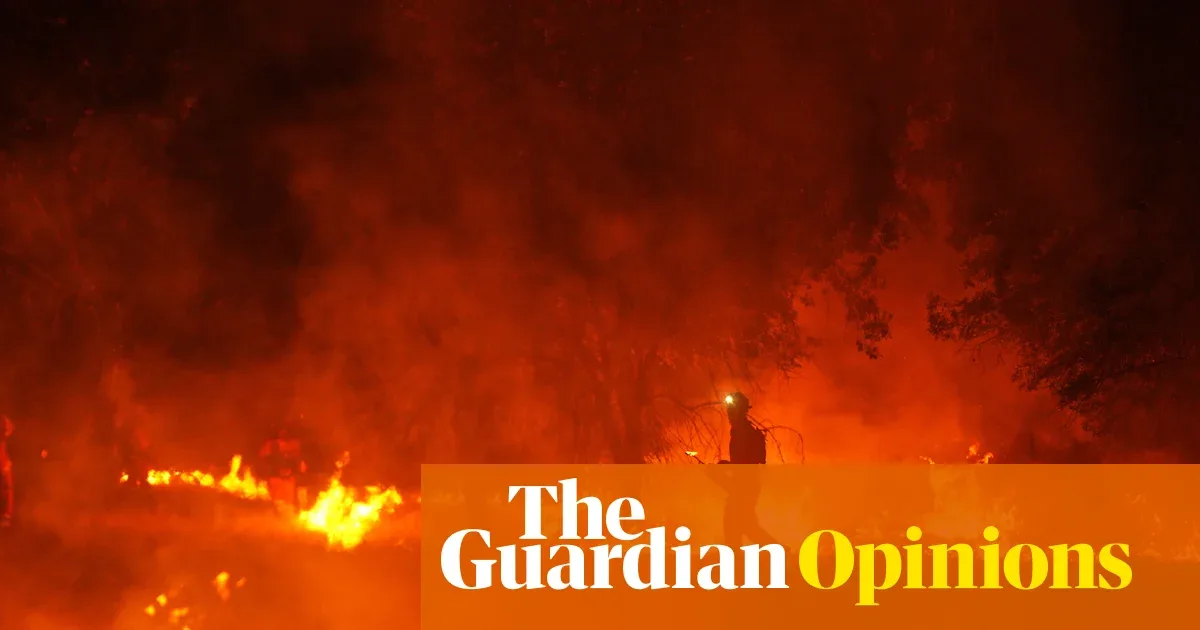
Environmental organizations and climate scientists highlighted four giant fossil extraction projects already in the approval pipeline: the Browse gas development off the coast of Western Australia, the Valhalla fracking project in the Kimberley, the Beetaloo Basin fracking project in the Northern Territory, and the Hunter Valley Operations coal mine in New South Wales. Scientists categorize these projects as "carbon bombs" because each could release a massive amount of fossil carbon dioxide emissions.
"What we export is climate suffering," wrote Bill Hare, a physicist and climate scientist who serves as CEO of Climate Analytics, in his commentary in The Guardian, criticizing the Australian government's stance as too favorable to the fossil industry.
The failure of COP31 was also tied to the weakening of commitment to the energy transition roadmap proposed by Brazil. The final text submitted by Turkey left only one reference to fossil fuels, namely carbon capture and storage (CCUS) technology, which happens to be a favorite of the fossil industry. The Australian government is known to have provided special legislative support for offshore CO2 storage, even though the effectiveness of the technology remains in question. The world's largest CCS project at Gorgon, operated by Chevron, is said to have failed to meet its targets.
At the regional level, a contradictory signal was also seen in the move by Western Australian Premier Roger Cook, who traveled to Japan with gas giant Woodside to promote the LNG market. Yet the latest report from the International Energy Agency (IEA) shows that to limit warming to 1.5 degrees Celsius, fossil gas demand must fall by about 40% from 2025 levels by 2035, driven by rapid electrification, efficiency gains, and the shift of gas power plants to renewable energy.
For Indonesia, this dynamic serves as an important mirror. As a country that also depends on coal and gas exports, Indonesia faces a similar dilemma: between pursuing short-term revenue from fossil commodities and building credibility as a serious player in the energy transition. Global pressure after COP31 is likely to increasingly push toward demands for transparency and consistency in climate policy, including through mechanisms such as carbon taxes and green trade standards that could affect the competitiveness of Indonesia's exports.
The failure to reach an agreement in Antalya is in fact not the end of everything, but a test for nations to prove their climate commitment at home. The public in Australia and other countries now waits to see whether their governments will shift focus from the rhetoric of international forums to real policies that protect citizens from the impacts of climate change. Without that, every climate conference will only be a stage without results.