Cioray State Elementary School Collapses, Tasikmalaya Students Forced to Learn in Emergency Tents
Baca dalam 60 detik
- Kerusakan bangunan SD Negeri Cioray di Kabupaten Tasikmalaya memaksa kegiatan belajar mengajar dialihkan ke tenda darurat.
- Insiden ini menambah daftar panjang persoalan infrastruktur pendidikan di daerah, yang berpotensi mengganggu kualitas pembelajaran.
- Pemerintah daerah dituntut segera melakukan perbaikan permanen agar hak pendidikan siswa tidak terus terhambat.
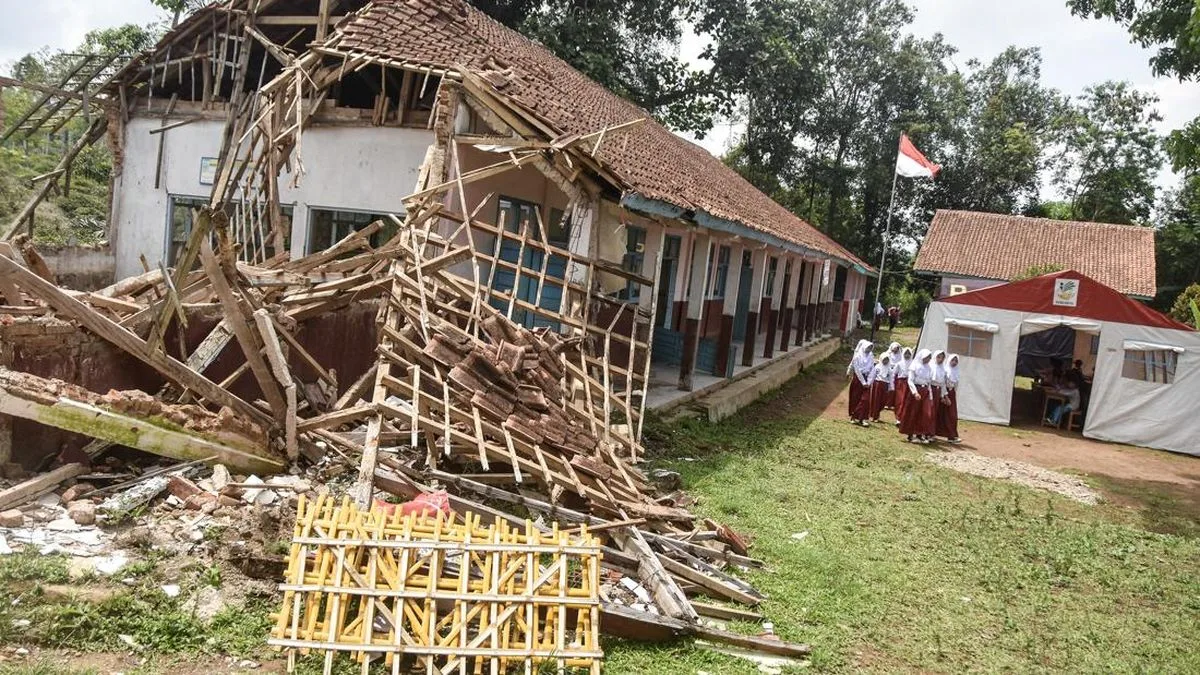
Teaching and learning activities at SD Negeri Cioray, Kertanegla Village, Tasikmalaya Regency, West Java, have been forced into emergency tents after the school building was damaged. Photos in circulation show students attending lessons seated on tarpaulins under the shelter of tents, a scene that contrasts with the educational facilities they should be receiving.
This event is not merely a local incident. Damage to school buildings in a number of regions in Indonesia is often a chronic problem that recurs every year, especially in areas with limited maintenance budgets. SD Negeri Cioray is the latest example of how poor educational infrastructure conditions directly affect children's learning process.
In the short term, learning in emergency tents is indeed a solution so that education does not stop entirely. However, education observers assess that the measure is only temporary and must not be allowed to drag on. Emergency tents cannot replace the function of a safe classroom, especially during the rainy season or extreme weather. In addition, limited facilities such as blackboards, desks, and chairs make learning interaction less than optimal.
"We hope the government steps in immediately. Children cannot study peacefully in tents like this," said a local resident, as quoted from an ANTARA report.
This issue highlights the weak system for monitoring and maintaining educational assets in the regions. Ideally, schools with high levels of damage should be prioritized in repair budgets, whether through the special allocation fund (DAK) or provincial government assistance. However, convoluted bureaucracy and fiscal constraints often make handling slow.
The Ministry of Primary and Secondary Education notes that thousands of schools in Indonesia remain in light to severe disrepair. The data shows that the infrastructure problem is not a single case, but part of a structural challenge that requires a long-term solution. On the other hand, regional governments are urged to be more responsive in proposing repair budgets before the damage worsens.
For the people of Tasikmalaya, this event is a reminder that the quality of education is determined not only by the curriculum and teacher competence, but also by the availability of adequate infrastructure. When children have to study under tents, there is a strong message about the inequality that still occurs in basic public services.
Going forward, the public will await concrete steps from regional and central governments. Will permanent repairs be realized soon, or will emergency tents become a permanent sight until the next school year? The answer to this question will be a test of the state's commitment to guaranteeing the right to adequate education for every child.